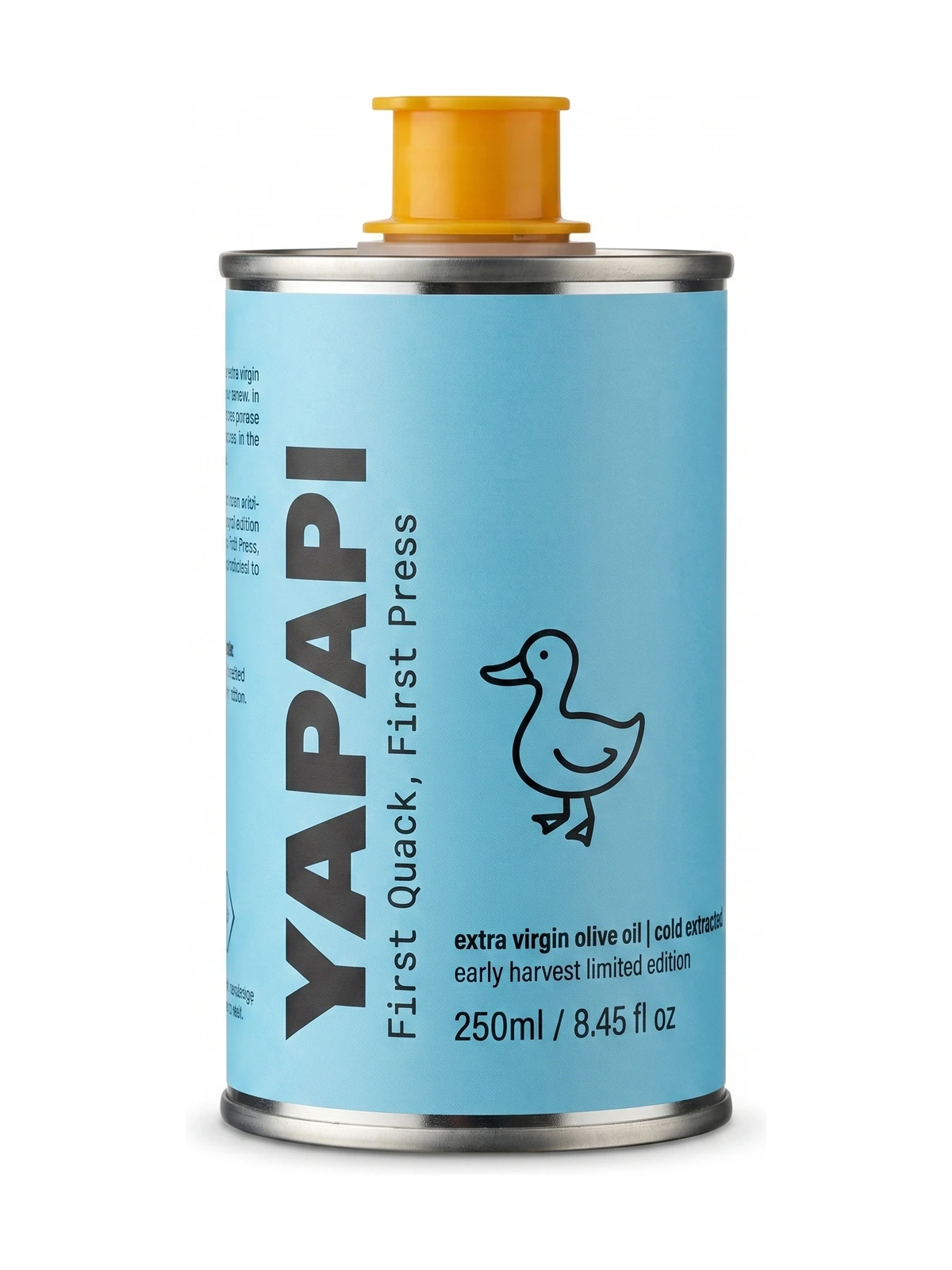
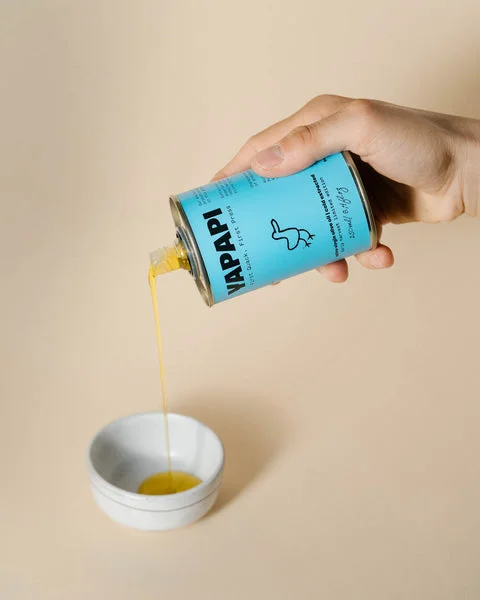
Yapapi Early Harvest

Produced by Yapapi — producer profile

Verification
Not found
No lab verification data found
Award Record
Not found
No award data found
Phenols
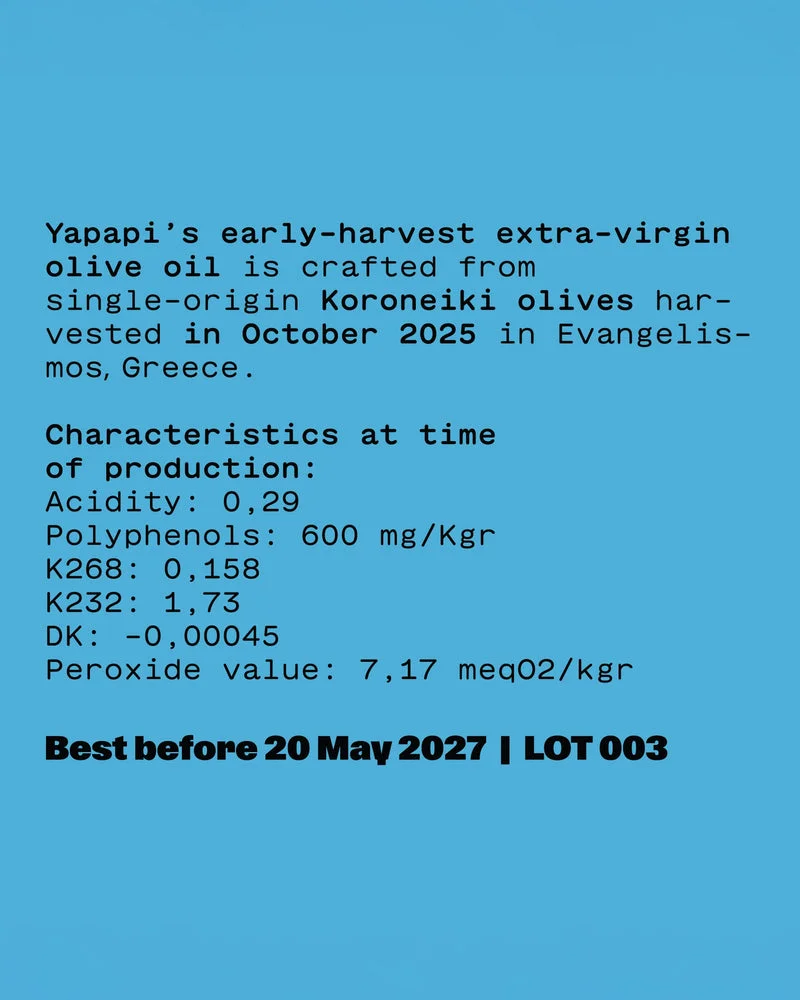
600 mg/kg
Reported total-phenol result
Latest Release
2025
1 release recorded

This single-origin extra virgin olive oil comes from Kalamata in Messinia, Peloponnese, harvested early in 2025 to capture freshness and vibrancy. The resulting oil is low in acidity and rich in polyphenols, with the bright, lively character typical of early-harvest Kalamata olives. A straightforward, uncomplicated oil that speaks clearly of its place and season.

Evidence over time

Release History

2026 Predicted
Expected harvest: 15 October 2026
Harvest Type
Early Harvest
Varieties
Phenols
~600 mg/kg
Polyphenols are naturally occurring compounds found in olives and other plants. In olive oil, reported phenolic content is a chemistry measure that can be associated with bitterness, pungency and oxidative stability; total phenols are not interchangeable with hydroxytyrosol-plus-derivatives measurement used for the EU-authorised wording.
This reported total-phenol result is not the hydroxytyrosol-plus-derivatives measurement used to assess the EU-authorised olive-oil wording.
FFA
~0.29
Free fatty acids measure the breakdown of fats in oil. Lower FFA values indicate quality and freshness.
2025
Harvested: 15 October 2025
Harvest Type
Early Harvest
Varieties
Phenols
600 mg/kg
Polyphenols are naturally occurring compounds found in olives and other plants. In olive oil, reported phenolic content is a chemistry measure that can be associated with bitterness, pungency and oxidative stability; total phenols are not interchangeable with hydroxytyrosol-plus-derivatives measurement used for the EU-authorised wording.
This reported total-phenol result is not the hydroxytyrosol-plus-derivatives measurement used to assess the EU-authorised olive-oil wording.
FFA
0.29%
Free fatty acids measure the breakdown of fats in oil. Lower FFA values indicate quality and freshness.
Explore the oil

Sensory Profile

Fruitiness 4.8
Fruitiness refers to the aroma and taste of fresh, ripe or green olives in the oil.
Bitterness 4.6
Bitterness is a positive sensory attribute of an EVOO. It can also signal the presence of phenolic compounds.
Pungency 4.2
Pungency is the pleasant peppery or spicy sensation experienced at the back of the throat when tasting olive oil.
Polyphenols 8.8
Polyphenols are naturally occurring compounds found in olives and other plants. In olive oil, reported phenolic content is a chemistry measure that can be associated with bitterness, pungency and oxidative stability; total phenols are not interchangeable with hydroxytyrosol-plus-derivatives measurement used for the EU-authorised wording.
green tomato artichoke fresh herbs pepper

Estimated Based on profiles for: Koroneiki .

Freshness & season

Harvest freshness

The harvest date is disclosed on the bottle or product information, making the release easier to date and compare.

Why choose it

Choose a recent, clearly dated release when you want the most vivid expression of its aromas and flavour.

Worth knowing

A harvest date does not reveal how the oil was stored, so date is an important signal rather than a guarantee of condition.

Product informationHarvested 15 October 2025Harvest date disclosed
Phenols & structure

High phenolic

The latest release lists 600 mg/kg total phenols.

Why choose it

Higher-phenol oils often suit customers who enjoy assertive bitterness and peppery pungency, and phenols can contribute to oxidative stability.

Worth knowing

A total-phenol result alone does not establish eligibility for a specific regulated health claim.

Published value600 mg/kg
Place & provenance

Sense of place

The oil is listed as coming from a single estate in Messinia, Peloponnese, Greece, giving it a specific farm origin.

Why choose it

Choose a clearly identified origin when local identity, traceability and connection to a particular growing area matter to you.

Worth knowing

Origin can make an oil distinctive, but does not by itself guarantee quality or a particular flavour.

Listed originMessinia, Peloponnese, GreeceSingle estate
Harvest & milling

How it was made

The olives are listed as being harvested manually.

Why choose it

These practices may appeal when you value hands-on harvesting, cooler fruit handling or direct estate control over milling.

Worth knowing

They describe production methods, not elapsed harvest-to-mill time or proof that the finished oil is fresher or better.

Product informationHand picked
Olive composition

Single variety listed

The latest release lists Koroneiki as its only recorded cultivar.

Why choose it

A release listing one cultivar is useful when you want to explore that variety's typical character.

Worth knowing

One listed cultivar does not record a percentage, so it should not be treated as proof of 100% composition without a source saying so.

Release dataKoroneiki

Related Oils

Sarmakinas Jahrgangswechsel Natives Olivenöl
Listing verification: Results Published