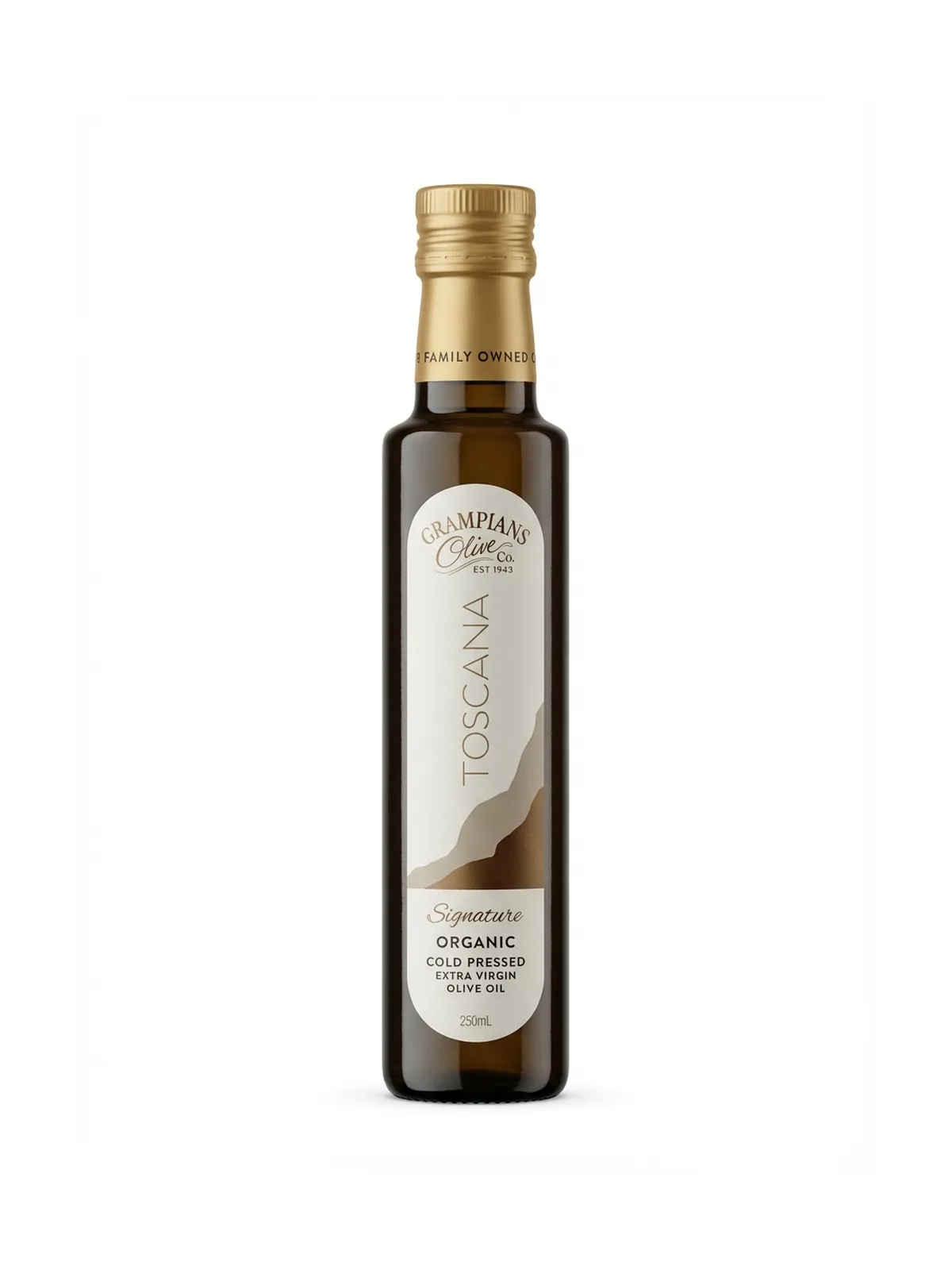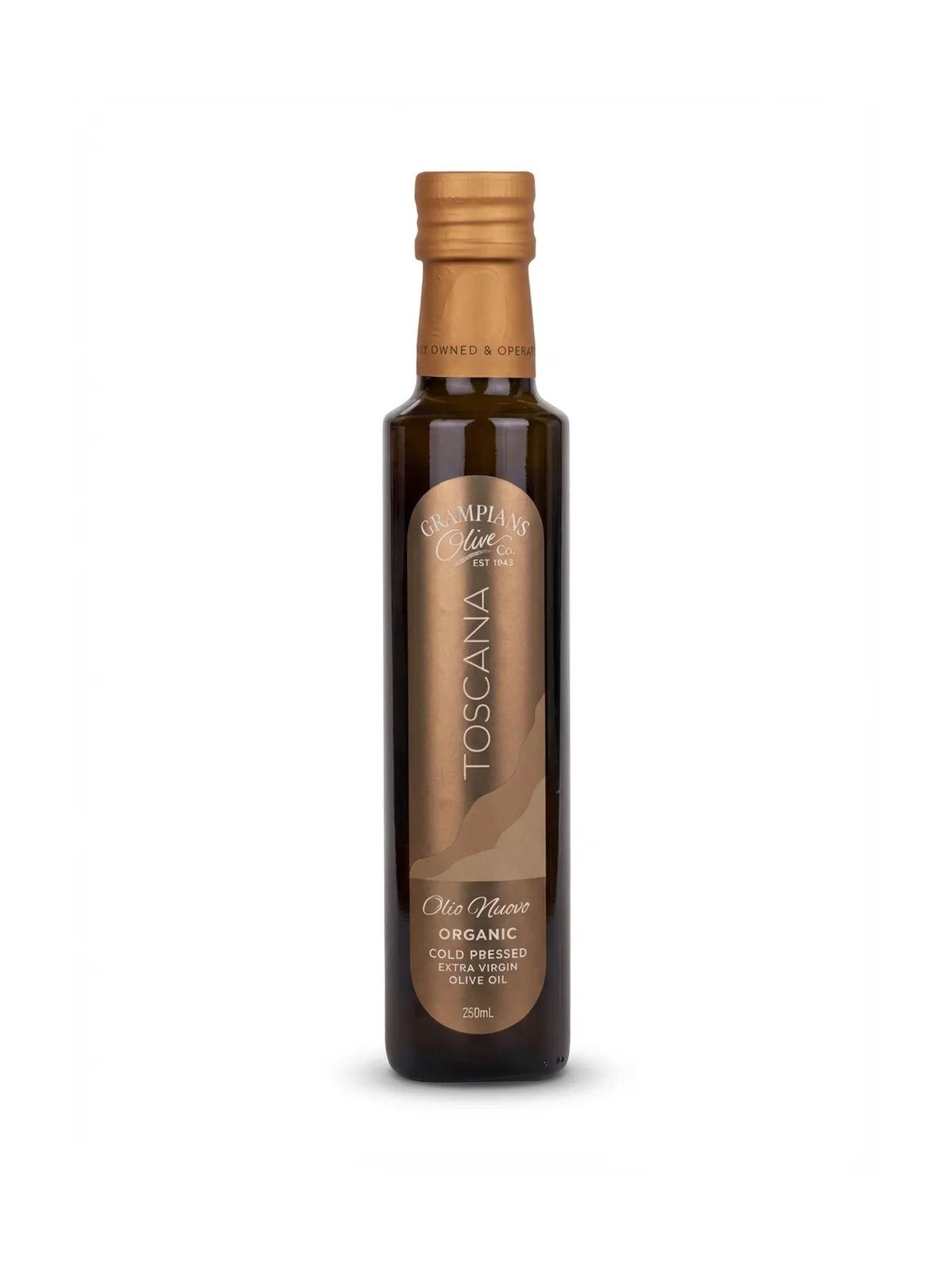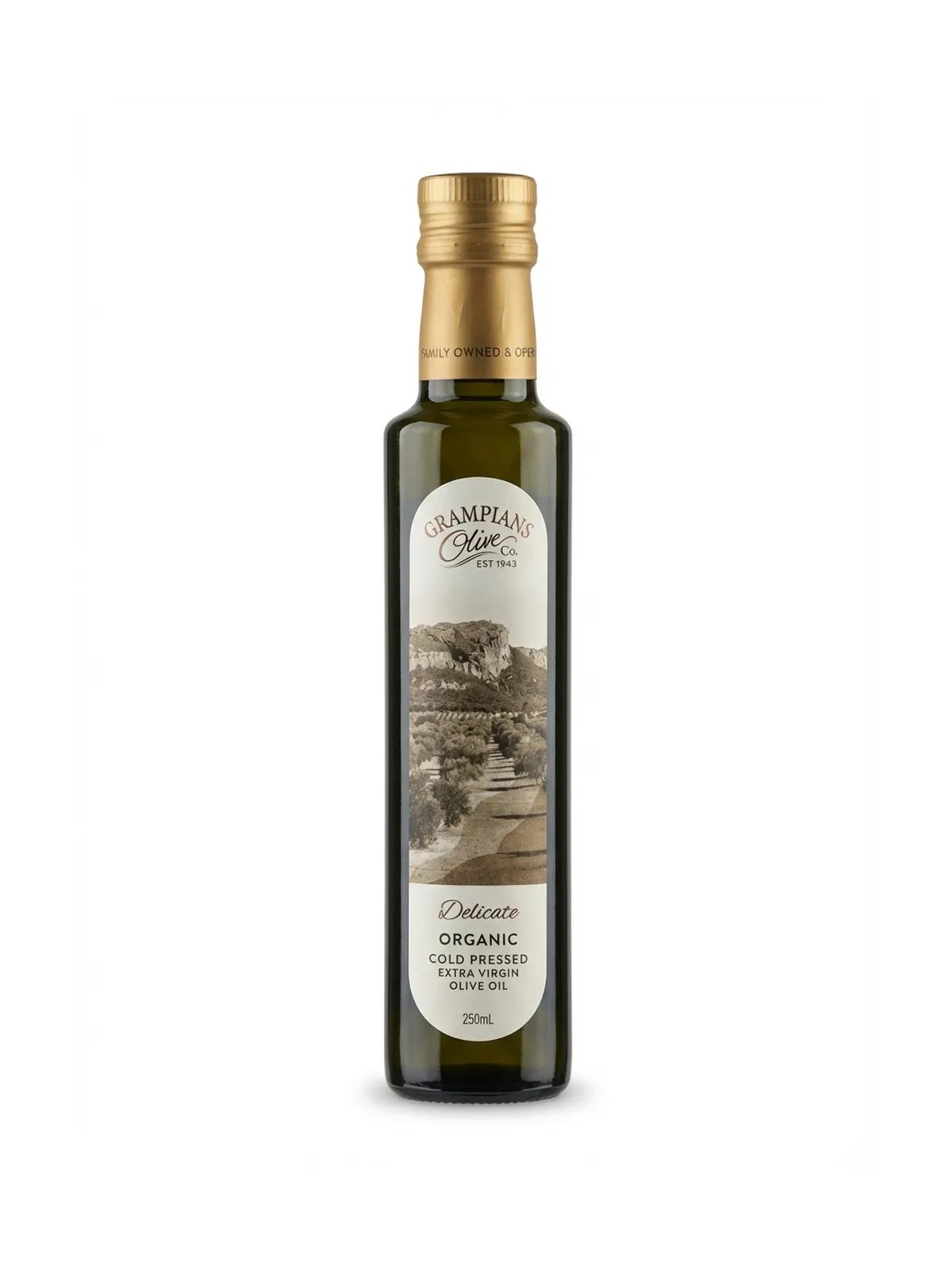
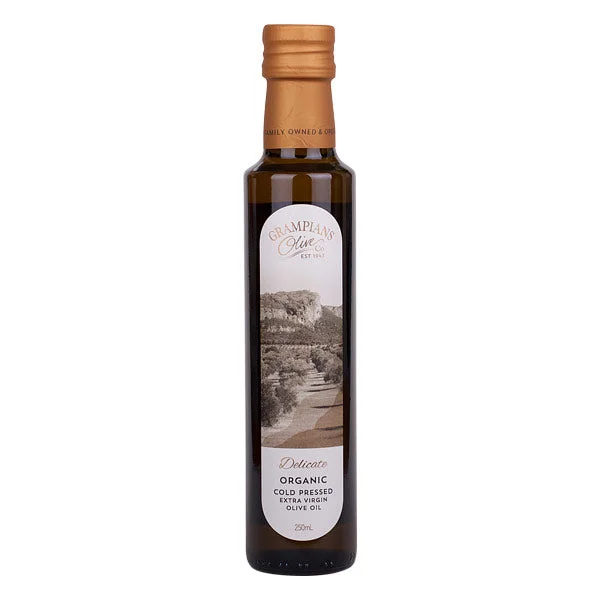
Grampians Olive Co. Delicate Organic Extra Virgin Olive Oil (Late Harvest)

Produced by Grampians Olive Co — producer profile

Verification
Not found
No lab verification data found
Award Record
Silver
2024 · AIOA
Phenols
284 mg/kg
Reported total-phenol result
Latest Release
2025
10 releases recorded
BenitoVerdale
Organic

This organic extra virgin olive oil is cold-pressed from late-harvest purple/ripe olives, featuring rare Benito and Verdale varieties. Grown on heritage trees in the Grampians region of Victoria, Australia, the olives are rain-fed only and pressed immediately after harvest to preserve their natural flavours. It is unfiltered, unrefined, and has a strong phenolic profile.

A limited-release product, this oil reflects the unique terroir of Grampians and its heritage Grove.

Evidence over time

Release History

2026 Predicted
Expected availability: 15 August 2026
Harvest Type
Late Harvest
Phenols
~184 mg/kg
Polyphenols are naturally occurring compounds found in olives and other plants. In olive oil, reported phenolic content is a chemistry measure that can be associated with bitterness, pungency and oxidative stability; total phenols are not interchangeable with hydroxytyrosol-plus-derivatives measurement used for the EU-authorised wording.
This reported total-phenol result is not the hydroxytyrosol-plus-derivatives measurement used to assess the EU-authorised olive-oil wording.
FFA
~0.2
Free fatty acids measure the breakdown of fats in oil. Lower FFA values indicate quality and freshness.
2025
Available: 15 August 2025
Producer Notes

Pressed from purple/ripe olives, producing smooth, delicate fruity flavours. Unfiletred, unrefined, and hand-bottled in small batches from heritage trees that rely on natural rainfall. The 2025 harvest was significantly reduced to approximately 20% of normal levels due to drought and heatwave condit...

Harvest Type
Late Harvest
Phenols
284 mg/kg
Polyphenols are naturally occurring compounds found in olives and other plants. In olive oil, reported phenolic content is a chemistry measure that can be associated with bitterness, pungency and oxidative stability; total phenols are not interchangeable with hydroxytyrosol-plus-derivatives measurement used for the EU-authorised wording.
This reported total-phenol result is not the hydroxytyrosol-plus-derivatives measurement used to assess the EU-authorised olive-oil wording.
FFA
0.14%
Free fatty acids measure the breakdown of fats in oil. Lower FFA values indicate quality and freshness.
2024
Producer Notes

Noted for its sweet, grassy nose with hints of tomato leaf, tobacco, lemon verbena, basil, and blossoms. The palate delivers fresh intensity with red fruit flavours, green tomato, a gentle bitterness, and subtle pungency, finishing with good length and a clean mouthfeel.

Harvest Type
Late Harvest
Phenols
153 mg/kg
Polyphenols are naturally occurring compounds found in olives and other plants. In olive oil, reported phenolic content is a chemistry measure that can be associated with bitterness, pungency and oxidative stability; total phenols are not interchangeable with hydroxytyrosol-plus-derivatives measurement used for the EU-authorised wording.
This reported total-phenol result is not the hydroxytyrosol-plus-derivatives measurement used to assess the EU-authorised olive-oil wording.
FFA
0.19%
Free fatty acids measure the breakdown of fats in oil. Lower FFA values indicate quality and freshness.
2023
Harvest Type
Late Harvest
Phenols
179 mg/kg
Polyphenols are naturally occurring compounds found in olives and other plants. In olive oil, reported phenolic content is a chemistry measure that can be associated with bitterness, pungency and oxidative stability; total phenols are not interchangeable with hydroxytyrosol-plus-derivatives measurement used for the EU-authorised wording.
This reported total-phenol result is not the hydroxytyrosol-plus-derivatives measurement used to assess the EU-authorised olive-oil wording.
FFA
0.2%
Free fatty acids measure the breakdown of fats in oil. Lower FFA values indicate quality and freshness.
2022
Harvest Type
Late Harvest
Phenols
159 mg/kg
Polyphenols are naturally occurring compounds found in olives and other plants. In olive oil, reported phenolic content is a chemistry measure that can be associated with bitterness, pungency and oxidative stability; total phenols are not interchangeable with hydroxytyrosol-plus-derivatives measurement used for the EU-authorised wording.
This reported total-phenol result is not the hydroxytyrosol-plus-derivatives measurement used to assess the EU-authorised olive-oil wording.
FFA
0.2%
Free fatty acids measure the breakdown of fats in oil. Lower FFA values indicate quality and freshness.
2021
Harvest Type
Late Harvest
Phenols
138 mg/kg
Polyphenols are naturally occurring compounds found in olives and other plants. In olive oil, reported phenolic content is a chemistry measure that can be associated with bitterness, pungency and oxidative stability; total phenols are not interchangeable with hydroxytyrosol-plus-derivatives measurement used for the EU-authorised wording.
This reported total-phenol result is not the hydroxytyrosol-plus-derivatives measurement used to assess the EU-authorised olive-oil wording.
FFA
0.3%
Free fatty acids measure the breakdown of fats in oil. Lower FFA values indicate quality and freshness.
2020
Harvest Type
Late Harvest
Phenols
190 mg/kg
Polyphenols are naturally occurring compounds found in olives and other plants. In olive oil, reported phenolic content is a chemistry measure that can be associated with bitterness, pungency and oxidative stability; total phenols are not interchangeable with hydroxytyrosol-plus-derivatives measurement used for the EU-authorised wording.
This reported total-phenol result is not the hydroxytyrosol-plus-derivatives measurement used to assess the EU-authorised olive-oil wording.
FFA
0.2%
Free fatty acids measure the breakdown of fats in oil. Lower FFA values indicate quality and freshness.
2019
Harvest Type
Late Harvest
Phenols (Est.)
~183.8 mg/kg
Estimated based on historical data.
FFA
0.2%
Free fatty acids measure the breakdown of fats in oil. Lower FFA values indicate quality and freshness.
2018
Harvest Type
Late Harvest
Phenols (Est.)
~183.8 mg/kg
Estimated based on historical data.
FFA
0.2%
Free fatty acids measure the breakdown of fats in oil. Lower FFA values indicate quality and freshness.
2017
Harvest Type
Late Harvest
Phenols (Est.)
~183.8 mg/kg
Estimated based on historical data.
FFA
0.2%
Free fatty acids measure the breakdown of fats in oil. Lower FFA values indicate quality and freshness.
2016
Harvest Type
Late Harvest
Phenols (Est.)
~183.8 mg/kg
Estimated based on historical data.
FFA
0.2%
Free fatty acids measure the breakdown of fats in oil. Lower FFA values indicate quality and freshness.
2015
Harvest Type
Late Harvest
Phenols (Est.)
~183.8 mg/kg
Estimated based on historical data.
FFA
0.2%
Free fatty acids measure the breakdown of fats in oil. Lower FFA values indicate quality and freshness.
1943
Producer established

Grampians Olive Co was established in 1943.

Explore the oil

Sensory Profile

Fruitiness 5
Fruitiness refers to the aroma and taste of fresh, ripe or green olives in the oil.
Bitterness 2.4
Bitterness is a positive sensory attribute of an EVOO. It can also signal the presence of phenolic compounds.
Pungency 2.4
Pungency is the pleasant peppery or spicy sensation experienced at the back of the throat when tasting olive oil.
Polyphenols 3.2
Polyphenols are naturally occurring compounds found in olives and other plants. In olive oil, reported phenolic content is a chemistry measure that can be associated with bitterness, pungency and oxidative stability; total phenols are not interchangeable with hydroxytyrosol-plus-derivatives measurement used for the EU-authorised wording.
fresh herbs green vegetables balanced grassy sweet almond fresh grass

Estimated Based on profiles for: Benito, Verdale .

Freshness & season

Harvest freshness

The harvest date is disclosed on the bottle or product information, making the release easier to date and compare. The oil is bottled without filtration and may retain natural moisture and fine olive solids.

Why choose it

Choose a recent, clearly dated release when you want the most vivid expression of its aromas and flavour.

Worth knowing

Olio nuovo and unfiltered describe different things, but both reward careful storage and prompt use.

Product informationHarvest date disclosedUnfiltered
Place & provenance

Sense of place

The oil is listed as coming from a single estate in Grampians & Pyrenees, Victoria, Australia, giving it a specific farm origin.

Why choose it

Choose a clearly identified origin when local identity, traceability and connection to a particular growing area matter to you.

Worth knowing

Origin can make an oil distinctive, but does not by itself guarantee quality or a particular flavour.

Listed originGrampians & Pyrenees, Victoria, AustraliaSingle estate
Harvest & milling

How it was made

The olives are listed as being milled at the producing estate or farm.

Why choose it

These practices may appeal when you value hands-on harvesting, cooler fruit handling or direct estate control over milling.

Worth knowing

They describe production methods, not elapsed harvest-to-mill time or proof that the finished oil is fresher or better.

Product informationProcessed on-site
Olive composition

Blend

The latest release lists Benito, Verdale.

Why choose it

A blend can combine complementary cultivar traits and offer a broader flavour profile.

Worth knowing

The listed varieties do not reveal their proportions or prove a particular blending intention.

Release dataBenitoVerdale
Farming & certification

Growing choices

The oil records certification to an organic production standard. The grove is listed as relying on rainfall rather than routine irrigation.

Why choose it

Choose the practices and certifications that best match your environmental and farming priorities.

Worth knowing

Farming method and certification may guide values-based choices, but do not automatically determine flavour, freshness or nutritional value.

Certification details listedCertified organic · NASAADry farmed

Related Oils

Grampians Olive Co. Olio Nuovo Organic
Listing verification: Published Results
Grampians Olive Co. Robust Extra Virgin Olive Oil
Listing verification: Published Results
Grampians Olive Co. Signature Organic Extra Virgin Olive Oil
Listing verification: Third Party Verified
Gooramadda Olives Special Reserve Extra Virgin Olive Oil
Listing verification: Producer Contacted
Cape Schanck Olive Estate's Coratina Extra Virgin Olive Oil
Listing verification: Unconfirmed