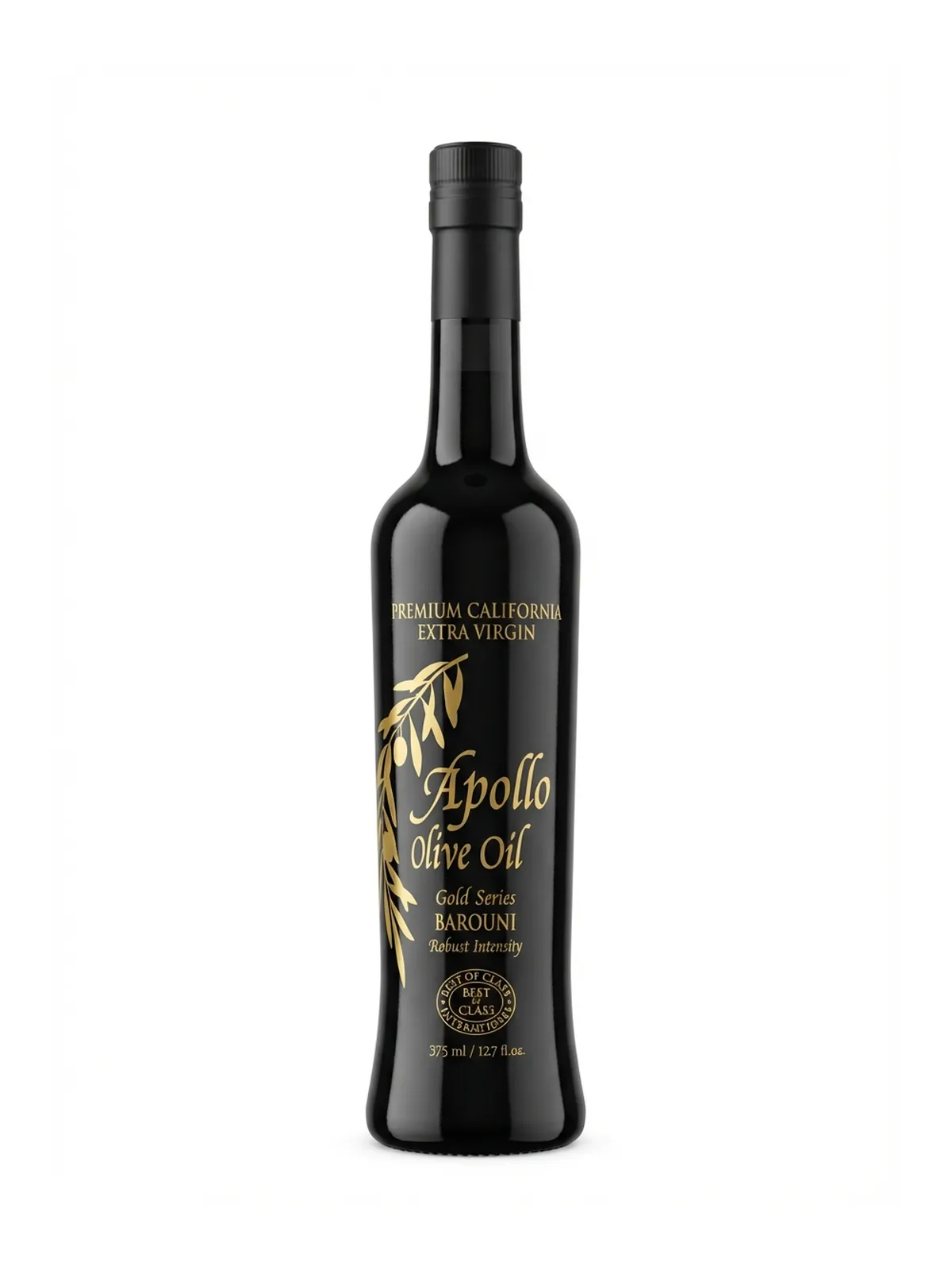
Apollo Olive Oil Barouni Non-Organic Extra Virgin Olive Oil

Apollo Olive Oil Barouni Non-Organic Extra Virgin Olive Oil

Price per litre

Apollo Olive Oil's Barouni extra virgin olive oil is produced from the Tunisian Barouni variety grown in California's Sierra foothills. Harvested and pressed in December. Suitable for cooking lamb, grilling fish and vegetables, and pairing with balsamic vinegar, hummus, and couscous.
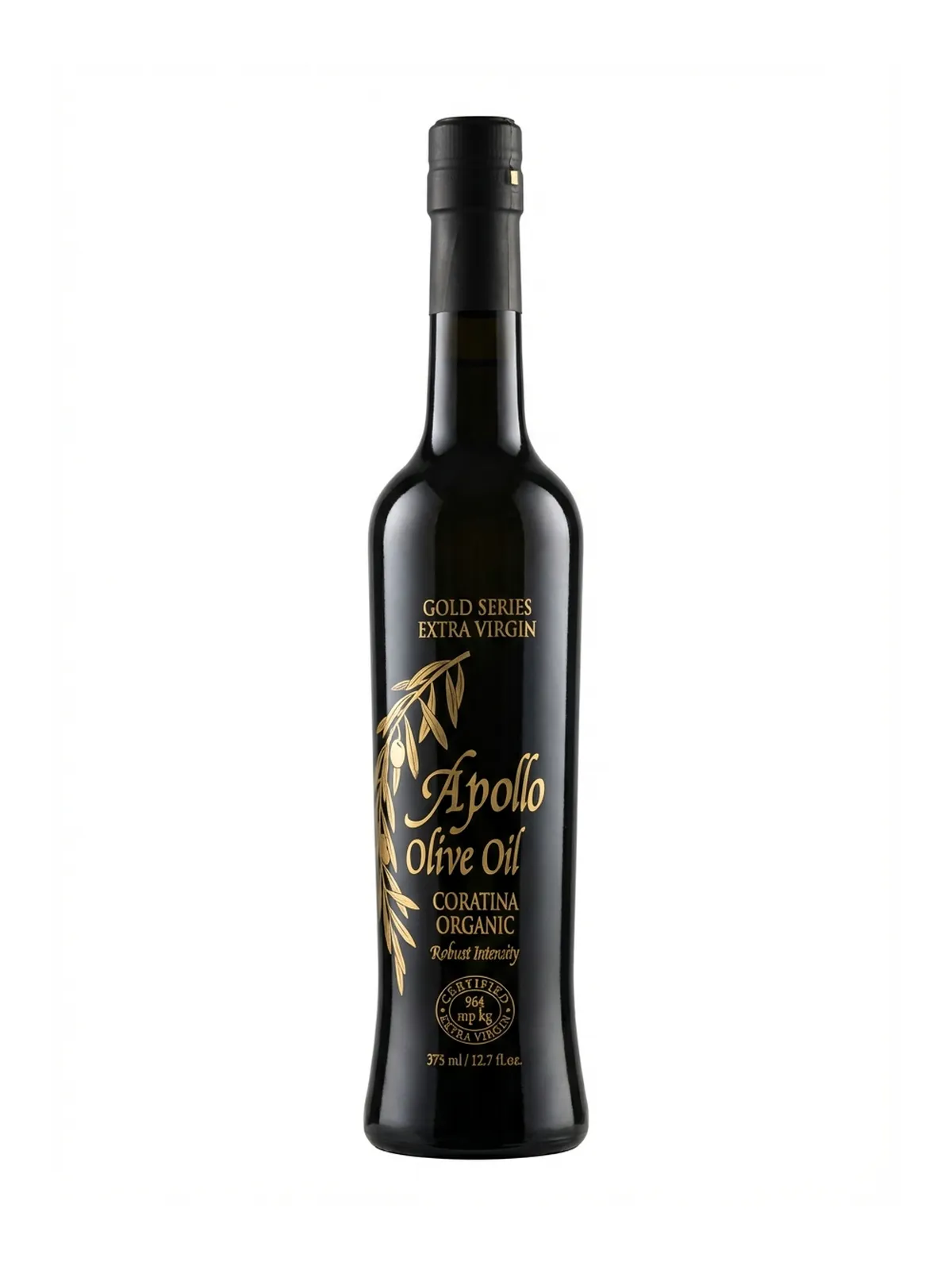
Estimated Flavor Profile

Sensory Profile

Fruitiness 7
Fruitiness refers to the aroma and taste of fresh, ripe or green olives in the oil.
Bitterness 7
Bitterness is a positive sensory attribute of an EVOO. It can also signal the presence of phenolic compounds, which have antioxidant properties.
Pungency 8
Pungency is the pleasant peppery or spicy sensation experienced at the back of the throat when tasting olive oil.
Polyphenols 7
Polyphenols are compounds found in plant-based foods, such as fruits, vegetables, herbs, tea, dark chocolate and EVOO. They act as antioxidants and protect you from cellular damage and decreases your risk of issues like cancer, diabetes, and heart disease.
intense fruit pepper nutty smoky herbs

Estimated Based on profiles for: Barouni .

Release History

12 releases
2025
Released February 2026
Varieties
Phenols
572 mg/kg
Polyphenols are compounds found in plant-based foods, such as fruits, vegetables, herbs, tea, dark chocolate and EVOO. They act as antioxidants and protect you from cellular damage and decreases your risk of issues like cancer, diabetes, and heart disease.
Meets EU health claim threshold (>250mg/kg).
FFA
0.25%
Free fatty acids measure the breakdown of fats in oil. Lower FFA values indicate quality and freshness.
2024
Released December 2024
Producer Notes

Robust intensity oil displays exotic overtones with rich pungency and peppery spiciness

Varieties
Phenols
598 mg/kg
Polyphenols are compounds found in plant-based foods, such as fruits, vegetables, herbs, tea, dark chocolate and EVOO. They act as antioxidants and protect you from cellular damage and decreases your risk of issues like cancer, diabetes, and heart disease.
Meets EU health claim threshold (>250mg/kg).
FFA
0.25%
Free fatty acids measure the breakdown of fats in oil. Lower FFA values indicate quality and freshness.
2023
Varieties
Phenols (Est.)
~585 mg/kg
Estimated based on historical data.
2022
Varieties
Phenols (Est.)
~585 mg/kg
Estimated based on historical data.
2021
Varieties
Phenols (Est.)
~585 mg/kg
Estimated based on historical data.
2020
Varieties
Phenols (Est.)
~585 mg/kg
Estimated based on historical data.
2019
Released December 2019
Varieties
Phenols (Est.)
~585 mg/kg
Estimated based on historical data.
2018
Varieties
Phenols (Est.)
~585 mg/kg
Estimated based on historical data.
2017
Varieties
Phenols (Est.)
~585 mg/kg
Estimated based on historical data.
2016
Varieties
Phenols (Est.)
~585 mg/kg
Estimated based on historical data.
2015
Varieties
Phenols (Est.)
~585 mg/kg
Estimated based on historical data.
2014
Varieties
Phenols (Est.)
~585 mg/kg
Estimated based on historical data.

Related Oils